The California Wool Growers Association recently held its 106th Annual California Ram Sale in Tulare, and UC Davis livestock veterinarians and students were on hand to help facilitate the event. As they have done for more than 50 years, the school’s livestock team provided health checks on all 500 rams up for sale.
Dr. Adriana Garzon, a third-year resident in the Livestock Herd Health and Reproduction Service, has been selected as the recipient of the 2026 American Association of Veterinary Clinicians (AAVC) Resident Award. The recognition is given annually to a resident in their final year of training who has achieved a high degree of excellence in their chosen specialty.
The American College of Veterinary Preventive Medicine (ACVPM) recently performed an on-site visit at the UC Davis School of Veterinary Medicine and granted full certification to two livestock residency programs. Veterinarians completing three-year residencies in Livestock Herd Health and Reproduction (LHHR) and Dairy Production Medicine (DPM) are now recognized by ACVPM for attaining eligibility to take their certifying examinations at the conclusion of their programs to become board certified in preventive veterinary medicine.
UC Davis Graduate Studies recently honored 34 faculty members with Graduate Program Advising and Mentoring Awards, including Dr. Jeffrey Stott, a professor in the UC Davis School of Veterinary Medicine’s Department of Pathology, Microbiology, and Immunology, and member of the Graduate Group in Integrative Pathobiology.
A small-scale sheep farm in California is the first in the Western United States to have the Awassi breed in its herd. Thanks to help from livestock veterinarians with the UC Davis veterinary hospital, Duckworth Family Farms had eight of the sheep—four males and four females—born via embryo transfer. The farm plans to use the sheep for dairy and fiber production, as well as semen and offspring sales.
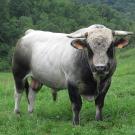
When rancher Paul Plouviez—owner of the 600,000-acre Bench Creek Ranch east of Fallon, Nevada—noticed that much of the mountainous areas of his large ranch were underutilized by his cattle, he thought back to his native France. He noticed that the terrain and climate of the area, with its extremely hot summers and cold winters, closely resembled the Pyrenees mountain range in southern France. He thought Bench Creek Ranch might be ideal land to raise Gascon cattle, a breed which thrives in the Pyrenees.