A multimillion-dollar Defense Department grant is helping veterinary researchers predict the emergence of highly pathogenic zoonotic viruses and prevent them spilling over to humans.
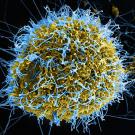
The government of Liberia, in partnership with the Center for Infection and Immunity (CII) at the Columbia University Mailman School of Public Health and EcoHealth Alliance, announced the discovery of Ebola virus in a bat in Liberia. This is the first finding of Zaire ebolavirus in a bat in West Africa, adding to other evidence suggesting bats serve as a natural wildlife reservoir for Ebola and other related viruses.
One of the most distinctive body parts of your typical English bulldog, French bulldog, or Boston terrier—their coiled screw tail—might be caused by a specific genetic mutation, suggests recent research. And more importantly for humans, that same genetic quirk might help scientists better understand a rare disorder in people.
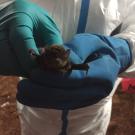
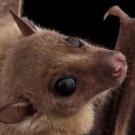
Scientists have discovered Marburg virus in fruit bats in Sierra Leone. This is the first time the deadly virus has been found in West Africa. Five Egyptian rousette fruit bats tested positive for active Marburg virus infection. Scientists caught the bats separately in three health districts: Moyamba, Koinadugu and Kono.
From Ebola to swine flu to HIV/Aids, viruses borne by animals have caused some of the most devastating epidemics in history. What will come next? In Sierra Leone, Joe Shute (a reporter with The Telegraph) joins PREDICT scientists working to find Disease X – a virus that is as yet undiscovered, but which could have the potential to ravage populations.
Veterinary teams can factor in the needs of the elderly and those with disabilities, as the need for care for pets belonging to older populations is only going to climb.
For the first time, scientists discovered a new ebolavirus species in a host prior to detection in an infected human or sick animal. This discovery Illustrates PREDICT project’s goal to find viruses before they spill over into people.
Scientists have identified a novel ebolavirus in free-tailed bats in Sierra Leone, providing the strongest evidence to date that bats are the natural hosts of these viruses. The new virus, called Bombali virus, was found in insectivorous bats roosting inside people’s houses. There is currently no evidence of human infection or spillover of this virus.
Pet owners have lower blood pressure and less stress, and they exercise more, among other benefits. But pets can sometimes also pass on diseases. People magazine highlights how taking good care of your pet will help prevent the spread.