UC Davis veterinarians led a team that has found a link between some popular grain-free, legume-rich dog diets and a type of nutritional deficiency and canine heart disease known as taurine-deficient dilated cardiomyopathy. The study was recently published in the journal PLOS ONE.
Congratulations to Dr. Beatriz Martínez López on being selected as a 2018-2019 Chancellor’s Fellow! In this 19th year of the program, Chancellor Gary S. May named 10 to the 2019 Class of Chancellor’s Fellow—the university’s annual honors program recognizing associate professors for high achievement in the quality and excellence of research and teaching.
Most veterinarians come to their careers because they love animals—but they may not have the skill set to build a solid business if they pursue a private practice. That’s where UC Davis can help through a new business certificate program designed by experts from its School of Veterinary Medicine and Graduate School of Management (GSM).
Dr. Michelle Hawkins specializes in avian veterinary medicine--a valuable skill in desperate need during the aftermath of California's Camp Fire. Here's her account of the situation and how she and "Team Avian" treated hundreds of birds impacted by the fire.
The government of Liberia, in partnership with the Center for Infection and Immunity (CII) at the Columbia University Mailman School of Public Health and EcoHealth Alliance, announced the discovery of Ebola virus in a bat in Liberia. This is the first finding of Zaire ebolavirus in a bat in West Africa, adding to other evidence suggesting bats serve as a natural wildlife reservoir for Ebola and other related viruses.
The UC Davis School of Veterinary Medicine has achieved another milestone in clinical equine imaging with the first successful use of positron emission tomography (PET) on a standing horse. Equine PET, pioneered at UC Davis with the first horse imaged in April 2015, has until now required patients to be under general anesthesia. The ability to utilize this technology on a standing horse under sedation instead of anesthesia will greatly expand the availability of this powerful imaging technique, allow for more routine use, and open it up to patients that are not able to undergo anesthesia.
Pet parent Laci Ping had just 15 minutes to pack up her life—which included six cats, six chickens, three dogs, and three reptiles—as the Camp Fire approached her home in Paradise, California. She managed to secure all but one of her animals – 5-month-old Mayson, a male gray tabby cat. Scared of what was happening, Mayson escaped at the last minute. Ping tried frantically to catch him, but he ran away too quickly. Heartbroken, Ping was forced to leave without him.
Eight UC Davis veterinary students and two faculty mentors, Drs. Beatrice Martinez-Lopez and Janet Foley, joined hundreds of veterinary students and faculty from across the country at CDC Veterinary Student Day on January 13 and 14. The biannual conference focuses on the critical role veterinary medicine plays in global public health and encourages student interest in veterinary public practice careers. This year’s event focused on the theme “League of Extraordinary Veterinarians” and took place in Atlanta, Georgia at CDC Headquarters.
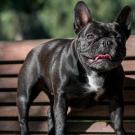
One of the most distinctive body parts of your typical English bulldog, French bulldog, or Boston terrier—their coiled screw tail—might be caused by a specific genetic mutation, suggests recent research. And more importantly for humans, that same genetic quirk might help scientists better understand a rare disorder in people.
In recent years, UC-Davis veterinary faculty and students have been on the front lines for various fires throughout the state, and this year was no different. In fact, the university closed its campus from Nov. 13-15, 2018, because of poor air quality as a result of the Camp Fire, but the Veterinary Medical Teaching Hospital remained open. In all, faculty and students at the hospital treated about 70 animals, including pigs, goats, sheep, horses, a donkey, cats, and a llama.
The Veterinary Medical Teaching Hospital is seeing an increasing number of cannabinoid intoxication since legalization. Animals find it on trails and in parks without their humans realizing it. Some dogs and cats need nothing more than extra comforting and fluids to counteract the effects, but others require additional medical intervention
Growing older can be tough – and that goes for all species. When it comes to age-related illnesses, dementia and Alzheimer’s disease are some of the most notorious and least understood human afflictions. If you’ve noticed your senior dog has been increasingly irritable and disoriented, having sleep troubles (including sleeping all day) or having frequent accidents inside the house, he or she may be suffering from a disease that manifests very similarly to dementia and Alzheimer’s disease in people.
SeaDoc Society is a nonprofit born out of the UC Davis School of Veterinary Medicine. It's trying to form a new medical database to diagnose and treat individual, ailing orcas. The project is being modeled after a personalized veterinary approach used on critically endangered mountain gorillas in Africa.
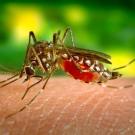
After collecting data and comparing it with every known mammal and bird species on Earth, scientists from the University of California, Davis, have identified wildlife species that are the most likely to host flaviviruses such as Zika, West Nile, dengue and yellow fever. Flaviviruses are known to cause major epidemics and widespread illness and death throughout the world.
Dr. Laurel Gershwin has been named as the 2018 Distinguished Veterinary Immunologist by the American Association of Veterinary Immunologists (AAVI) for lifetime achievement in veterinary immunology.