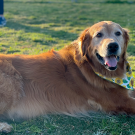
A pioneering study at the UC Davis Weill School of Veterinary Medicine, funded by the American Kennel Club Canine Health Foundation, is utilizing advanced, blood-based technologies to understand the underlying causes of copper hepatopathy in Labrador retrievers and develop non-invasive diagnostic tools for this silent disease. To support this vital research and encourage participation, the cost of the liver biopsy is covered for enrolled dogs.
This article first appeared in the Spring 2026 issue of Synergy magazine
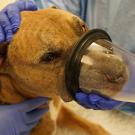
Luna is back to work as a certified therapy dog—bringing her calm nature to healthcare centers, schools, airports, and other places—after neurosurgery to remove a difficult-to-access brain tumor. The 9-year-old Maltese was the first patient enrolled in a clinical trial investigating fluorescence-guided surgery to remove canine brain tumors.
Scientists at the University of California, San Francisco and the University of California, Davis have completed the first clinical trial of a new cancer drug in pet cats, offering hope for a disease that has long been nearly impossible to treat. The study found 35 percent of the cats with squamous cell carcinoma who received treatment had their disease controlled with minimal side effects. The drug will likely be effective for humans with head and neck squamous cell carcinoma. The study was published today in Cancer Cell.
Experimental treatment saved a kitten’s life after he was found abandoned at a Sacramento park suffering from an illness that is usually fatal in cats.
Chunk was just a tiny kitten when he was brought to the UC Davis veterinary hospital where he was enrolled in a CCAH-funded clinical trial studying various treatments for ringworm.
The Veterinary Center for Clinical Trials at the UC Davis School of Veterinary Medicine welcomes Drs. Krystle Reagan, DVM, PhD, DACVIM (SAIM) and Robert Rebhun, DVM, PhD, DACVIM (Oncology) as new co-directors of the center.
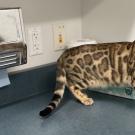
Lily, a 9-month-old female Bengal cat, is now in remission from feline infectious peritonitis (FIP) thanks to clinical trials at the UC Davis veterinary hospital.