Veterinarians at the University of California, Davis School of Veterinary Medicine have developed an algorithm utilizing artificial intelligence (AI) to detect Addison’s disease, a rare, life-threatening illness in dogs. Addison’s disease, also known as hypoadrenocorticism, is a condition that results in a lack of critical hormones, which are needed to maintain health.
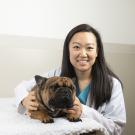
Dog owner Rob Beasom and his wife were out of town when they received a frantic call from their dog sitter. Barley, their 3-year-old male French bulldog, severely hurt himself while jumping off the couch, rendering him paralyzed in his back legs. Beasom immediately made plans to return home and called Barley’s primary veterinarian. After Beasom described the situation, the veterinarian told him to take Barley to the UC Davis veterinary hospital.
Dr. Niels Pedersen, a distinguished emeritus professor at the UC Davis School of Veterinary Medicine and a renowned expert on infectious and immunologic diseases in dogs and cats, says our pets are not at risk of contracting COVID-19.
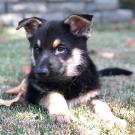
When Ernesto and Chelsea Torres received Riley as a young puppy, they had no idea she had a congenital heart defect. The 4-month-old German shepherd was getting her first immunizations when her veterinarian discovered she had a loud heart murmur. He immediately referred Riley to the Cardiology Service at the UC Davis veterinary hospital.
Earlier this year, pet owners Glen and Renee shared with us the story of their dog Trooper, who was diagnosed with cancer. In their words, here is his inspiring tale…
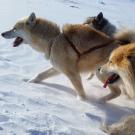
Inuit sled dogs have changed little since people migrated with them to the North American Arctic across the Bering Strait from Siberia, according to researchers who have examined DNA from the dogs from that time span.
In 2016, 4-year-old English bulldog Henry Hudson was diagnosed with a mast cell tumor (MCT) on his leg. The MCT was surgically removed with complete margins, but his veterinarian suggested that he be taken to the UC Davis veterinary hospital for chemotherapy.
The UC Davis School of Veterinary Medicine is one of three national participants in the Vaccination Against Canine Cancer Study. Cancer is the leading cause of death in dogs (accounting for approximately 30 percent of all deaths), and this will be the largest clinical trial conducted to date for canine cancer.
Riley, a 14-year-old Irish terrier, was referred to the UC Davis veterinary hospital for a dental examination in December 2015. Upon examination by the Dentistry and Oral Surgery Service, a pea-sized black mass was discovered on the roof of his mouth. Veterinarians suspected the mass to be an oral melanoma tumor—a cancer that could be fatal within 3-6 months if not treated aggressively—and submitted a tissue sample for biopsy.