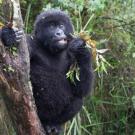
While COVID-19 has been racing through much of the human population, the SARS-CoV-2 virus has also turned up in other mammals. This leads to many questions.
On April 22, the Office of Research hosted a Team Research Forum with six experts to discuss the strength of interdisciplinary research in predictive intelligence so humans can better prepare themselves to navigate the risks of future pandemic challenges.
Understanding the interaction between people, animals, plants and their shared environment — collectively known as One Health — has never been so important.
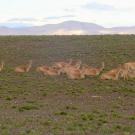
Mange has decimated the population of wild vicuñas and guanacos in an Argentinian national park that was created to conserve them, according to a study from the Administration of National Parks in Argentina and the University of California, Davis.
Western snowy plovers, listed as federally threatened under the Endangered Species Act and considered a “species of special concern” in California, were some of the animals rescued by OWCN wildlife responders during the Orange County oil spill.
SpillOver, a new web application developed by UC Davis scientists, and contributed to by experts from all over the world, ranks the risk of wildlife-to-human spillover for newly discovered viruses.
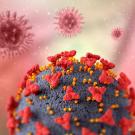
A new study led by UC Davis shows how SARS-CoV-2, the virus that causes COVID-19, and SARS-CoV-1, which caused the 2003 SARS outbreak, are related to each other.
Heart disease is a killer threat for southern sea otters feasting on domoic acid in their food web, according to a study led by the University of California, Davis.
On Jan. 11, the San Diego Zoo announced members of its gorilla troop had tested positive for SARS-CoV-2, the first known instance of natural transmission to great apes.
Exposure to Ebolaviruses may be more frequent and widespread than previously thought say UC Davis scientists who found antibodies to Ebola virus in people up to a year before the 2018 Ebola virus disease outbreak began in the Eastern Democratic Republic of Congo, or DRC.