Tiddles was a 4-year-old Papillon when he was diagnosed in 2011 with a brain tumor. His referring veterinarian gave him approximately 2 months to live. Other documented cases showed that, even with innovative treatments, he would probably not survive more than a year or two. But thanks to research, equipment, and treatments made possible by the donors to the Center for Companion Animal Health, Tiddles beat the odds. He recently turned 15 and is celebrating a decade of being cancer free.
The Veterinary Center for Clinical Trials at the UC Davis School of Veterinary Medicine welcomes Drs. Krystle Reagan, DVM, PhD, DACVIM (SAIM) and Robert Rebhun, DVM, PhD, DACVIM (Oncology) as new co-directors of the center.
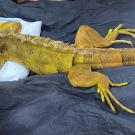
Ragoth, a 4-year-old male green iguana, was treated with chemotherapy and radiation therapy at the UC Davis veterinary hospital for his mast cell tumors.
A protein that the body naturally produces could become an important new immunotherapy drug in the cache of cancer-fighting tools available to oncologists.
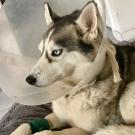
Jerico, an 8-year-old female Siberian husky, underwent successful surgery to remove a cancerous tumor, followed by 14 rounds of radiation therapy treatments.
Dixie, an 8-year-old Dachshund/Chihuahua mix, is currently undergoing chemotherapy every 2-3 weeks, along with other medications and has responded well.
Each year, more than 6 million dogs in the US will be diagnosed with cancer. In fact, about half of all dogs over the age of 10 will eventually develop some form of cancer. This is always a stressful situation for the animals’ owners who must make complex and difficult decisions about how to treat their pet.