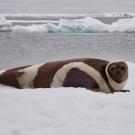
Scientists have linked the decline in Arctic sea ice to the emergence of a deadly virus that could threaten marine mammals in the North Pacific, according to a study from the University of California, Davis.
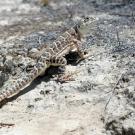
Detection dogs trained to sniff out the scat of an endangered lizard in California’s San Joaquin Valley, combined with genetic species identification, could represent a new, noninvasive sampling technique for lizard conservation worldwide.
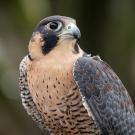
Have you ever been eye to eye with a peregrine falcon? Enjoy a rare close-up experience with Phoenix, our resident peregrine at the California Raptor Center’s (CRC) Open House on Saturday, Oct. 19th from 9 a.m. to 3 p.m.
Dr. Jackie Gai ’01 serves as the director of veterinary services for the Performing Animal Welfare Society and works with elephants, lions, tigers and bears. But she still has a soft spot for ducks.
UC Davis scientists have pinpointed specific strains of the parasite Toxoplasma gondii that are killing southern sea otters, tracing them back to a bobcat and feral domestic cats from nearby watersheds.
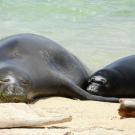
An article in Salon describes how scientists over the last couple decades have compiled evidence that cat feces, which often drains into the ocean in coastal cities, can infect Hawaiian monk seals with toxoplasmosis — a potentially fatal disease caused by a single-cell parasite.
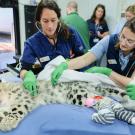
As one of only 215 board-certified zoological veterinarians in the world, Dr. Jenessa Gjeltema is rarer than some of the endangered animals she treats at the Sacramento Zoo.
The Bodega Marine Laboratory’s white abalone program has millions of new additions following its most successful spawning ever at the University of California, Davis, facility.
Scientists report the first cases of foot disease for endangered huemul deer in Chilean Patagonia in a study led by the Wildlife Conservation Society and the University of California, Davis’ One Health Institute, with partnering institutions in Chile and the United States.