Two isolated mountain lion populations in Southern California’s Santa Ana and Santa Monica Mountains are at risk of local extinction, perhaps as soon as within 50 years, according to a study published in the journal Ecological Applications.
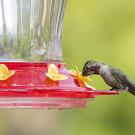
Many people set up hummingbird feeders in their yards to nurture and watch these high-energy pollinators. But could the sugar water they provide be impacting these tiny feathered friends?
SeaDoc Society is a nonprofit born out of the UC Davis School of Veterinary Medicine. It's trying to form a new medical database to diagnose and treat individual, ailing orcas. The project is being modeled after a personalized veterinary approach used on critically endangered mountain gorillas in Africa.
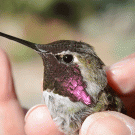
Wildlife veterinarians at the Hummingbird Health and Conservation Program in the UC Davis School of Veterinary Medicine recently published a study describing a new system to track hummingbirds visiting feeders in urban gardens. Feeder behavior offers clues about hummingbird health, and disease transmission.
Coconut, the snow leopard cub born at the Sacramento Zoo earlier this year, underwent a rare eyelid surgery on Wednesday, October 24. UC Davis veterinary specialists and the Sacramento Zoo veterinary team collaborated to correct a congenital eyelid defect known as colombas. This ocular deformity is sometimes documented in snow leopards under human care.
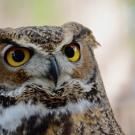
If you give a hoot about raptors, come visit the California Raptor Center’s (CRC) Open House on Saturday, Oct. 20th from 9 a.m. to 3 p.m. We have two new owl residents for you to meet—a barred owl named Tadita, and Ember, our first barn owl education ambassador in six years!
For the first time, scientists discovered a new ebolavirus species in a host prior to detection in an infected human or sick animal. This discovery Illustrates PREDICT project’s goal to find viruses before they spill over into people.
Congratulations to Dr. Marcela “Marcy” Uhart, director of the Karen C. Drayer Wildlife Health Center’s Latin America Program. She received the Wildlife Disease Association's 2018 Distinguished Service Award.
A black bear cub that was severely burned when a wildfire roared through her habitat in Northern California is receiving a fishy treatment that officials and veterinarians hope will heal her quickly so she can be released back into the wild.