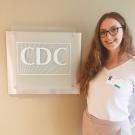
Nicole Cady, Class of 2020, recently spent a few weeks involved in managing the novel coronavirus outbreak from the Centers for Disease Control and Prevention (CDC) in Atlanta as an Epidemiology Elective Program Student.
Smoke from wildfires may have long-term health effects, according to research on juvenile monkeys. The results were presented at the American Association for the Advancement of Science meeting in Seattle by the school's Professor Lisa Miller.
Dr. Niels Pedersen, a distinguished emeritus professor at the UC Davis School of Veterinary Medicine and a renowned expert on infectious and immunologic diseases in dogs and cats, says our pets are not at risk of contracting COVID-19.
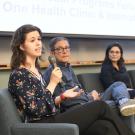
As we start a new decade, the UC Davis School of Veterinary Medicine is participating in a national campaign to promote the value of One Health, a collaborative approach to finding new solutions that benefit animal, human and environmental health.
Microbes living in the rectum could make a difference to the effectiveness of experimental HIV vaccines, according to research led by Smita Iyer, assistant professor at the UC Davis Center for Immunology and Infectious Diseases and School of Veterinary Medicine.
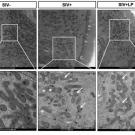
Katti (Horng) Crakes, doctoral student in the schools of Medicine and Veterinary Medicine at UC Davis, served as first author on a UC Davis research study that found that the damaged gut lining (known as leaky gut) in monkeys infected with chronic simian immunodeficiency virus (SIV), an HIV-like virus, was rapidly repaired within five hours of receiving Lactobacillus plantarum bacteria. The outcome lends hope that leaky gut, a common condition among HIV patients, could be effectively treated in the future.
The U.S. Agency for International Development will award up to $85 million over the next five years to the University of California, Davis’ One Health Institute and consortium partners to implement the One Health Workforce—Next Generation project.
UC Davis nearly matched its record level of annual research funding in 2018-19, receiving $845.5 million in grants and contracts. Last year’s top award of $34.9 million from the California Department of Food and Agriculture went to the veterinary school's California Animal Health & Food Safety Laboratory System, which safeguards public health by providing diagnoses for animal diseases, including those affecting humans.