Researchers from the Schools of Veterinary Medicine and Medicine, and the Clinical Translational Science Center (CTSC), gathered last week in a half-day mixer to foster new collaborations. Three areas of focus included: anesthesia/pain, cardiovascular and orthopedic sciences.
In an increasingly crowded world where people and animals come into ever-closer contact, the lines that separate us – physical, biological, ecological, behavioral – are essentially gone. So, the future of conservation will be initiatives that address the entire ecosystem – a ‘One Health’ approach.
Eight UC Davis veterinary students and two faculty mentors, Drs. Beatrice Martinez-Lopez and Janet Foley, joined hundreds of veterinary students and faculty from across the country at CDC Veterinary Student Day on January 13 and 14. The biannual conference focuses on the critical role veterinary medicine plays in global public health and encourages student interest in veterinary public practice careers. This year’s event focused on the theme “League of Extraordinary Veterinarians” and took place in Atlanta, Georgia at CDC Headquarters.
One of the most distinctive body parts of your typical English bulldog, French bulldog, or Boston terrier—their coiled screw tail—might be caused by a specific genetic mutation, suggests recent research. And more importantly for humans, that same genetic quirk might help scientists better understand a rare disorder in people.
After collecting data and comparing it with every known mammal and bird species on Earth, scientists from the University of California, Davis, have identified wildlife species that are the most likely to host flaviviruses such as Zika, West Nile, dengue and yellow fever. Flaviviruses are known to cause major epidemics and widespread illness and death throughout the world.
Helping lawmakers better understand the galaxy of opportunities associated with comparative research was the focus of an AAVMC Legislative Briefing held on July 19 in the Rayburn Building on Capitol Hill.
As a 2018 AAVMC Faculty Fellow, Dr. Christine Kreuder Johnson’s days were jam-packed. During her fellowship, June 30-July 21, she might typically spend her day on Capitol Hill meeting face-to-face with four or five members of Congress or other government officials.
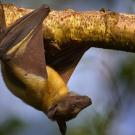
Scientists have identified a novel ebolavirus in free-tailed bats in Sierra Leone, providing the strongest evidence to date that bats are the natural hosts of these viruses. The new virus, called Bombali virus, was found in insectivorous bats roosting inside people’s houses. There is currently no evidence of human infection or spillover of this virus.
Evaluation of health security systems in the United States in 2016 revealed a prevalent issue: inconsistent coordination across federal, state, and local health sectors. To address this concern, the World Health Organization has encouraged the United States to build a more formal One Health strategy that enables coordination among all stakeholders in human, animal, and environmental health.
Vanilla Bean, a 1-year-old female Burmese cat from Mill Valley, California, was brought to a veterinary cardiologist for respiratory distress. The vet diagnosed her with a rare congenital heart defect that does not allow blood to flow properly through the chambers. This improper flow can cause too much blood to collect in one chamber, create pressure, enlarge it, and ultimately lead to congestive heart failure.