



UC Davis to Reinstate Small Animal Rotating Internship
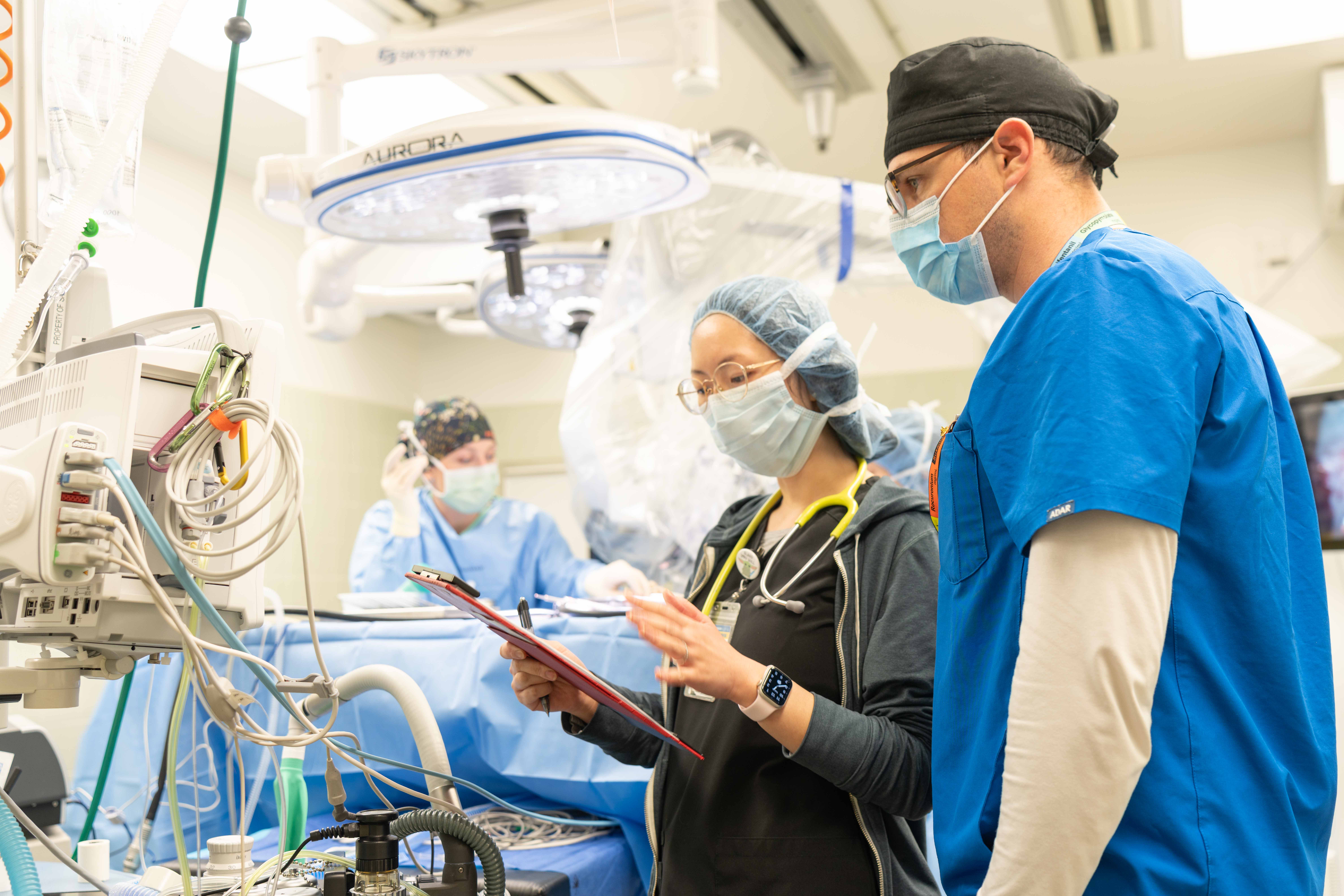
For the first time in more than 45 years, the UC Davis William R. Pritchard Veterinary Medical Teaching Hospital (VMTH) will host a one-year Small Animal Rotating Internship for the 2027-28 academic year. Five positions will be offered to veterinarians looking to improve their clinical skills across a wide range of small animal specialties.
Last offered at UC Davis in 1980-81, the revived internship will offer core rotations through small animal internal medicine, soft tissue surgery, emergency/critical care, cardiology, medical oncology, neurology, anesthesia, diagnostic imaging, and clinical pathology. Additional elective rotations may include exotics, orthopedic surgery, dermatology, ophthalmology, primary care, anatomic pathology, radiation oncology, nutrition, and behavior, and research opportunities may be available.
The VMTH’s breadth of small animal specialty services, faculty expertise, and clinical infrastructure—coupled with one of the largest caseloads of any academic teaching hospital in the nation (55K+ annually)—position it to be a leading choice for applicants.
“Few teaching hospitals have the faculty expertise and clinical caseload that UC Davis has,” said Dr. Amandine Lejeune, co-director of House Officer Affairs. “The VMTH is one of the most well-suited environments to host such an important component of postgraduate clinical training. Our faculty continue to push the boundaries of veterinary medicine and are leaders in new treatment development through clinical trials and other cutting-edge procedures. Interns will be immersed in this innovative care every day throughout their training.”
Most participants in rotating internships are recent DVM graduates. The program is designed to be a building block toward a variety of career paths, including specialty residency programs, academic clinical practice, referral medicine, emergency care, or high-quality general practice.
“As a leader in the veterinary field, UC Davis is responsible for teaching and mentoring the next generation of veterinarians, promoting pathways to specialization, encouraging interest in academic careers, as well as preparing veterinarians for the increasingly busy world of general practice,” said Dr. Kate Hopper, director of the VMTH’s Small Animal Hospital. “Given the breadth of specialists at UC Davis, it is essential to allow interns access to these services to provide exposure to future career paths.”
The internship will also strengthen the VMTH’s teaching environment by allowing current DVM students to work alongside “near-peer” veterinarians developing from new graduates into increasingly confident clinicians, while faculty members and residents gain additional opportunities for teaching and mentorship. This will give current DVM students an opportunity to visualize the advantages provided by an academic rotating internship and could encourage more students to pursue them.
“A rotating internship is one of the most immersive ways for a veterinarian to grow clinically after graduation,” said Dr. Michael Mison, chief veterinary medical officer of the VMTH. “Over the course of a year, interns manage a broad range of patients while learning alongside specialists, residents, and other experienced clinicians. The goal is to build clinical judgment, competency, and confidence, whether the next step is general or emergency practice, residency training, or another career path. Given the breadth and depth of clinical expertise at UC Davis, this is a program we should be offering.”
The VMTH’s diverse caseload will expose interns to a variety of patient scenarios, including emergency, first-opinion, referral, and specialty cases. Through supervised experiential learning, interns will develop clinical competence, professional communication skills, and clinical teaching abilities, and will be given progressively greater autonomy in patient care.
“Interns will assume primary responsibility for cases appropriate to their experience, knowledge, and level of comfort, with consistent faculty support and supervision,” said Dr. Jamie Burkitt, co-director of House Officer Affairs. “As they demonstrate greater clinical proficiency, their responsibility levels will grow – examples may include managing emergency patients and being assigned the lead on complex specialty cases under the supervision of a board-certified specialist.”
Interested participants are encouraged to visit the UC Davis House Officer website for a specific program description and application process.
The application period begins November 1, 2026, and will remain open until January 4, 2027, and is through the Veterinary Intern and Resident Matching Program.
# # #