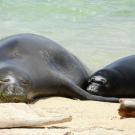
An article in Salon describes how scientists over the last couple decades have compiled evidence that cat feces, which often drains into the ocean in coastal cities, can infect Hawaiian monk seals with toxoplasmosis — a potentially fatal disease caused by a single-cell parasite.
Scientists report the first cases of foot disease for endangered huemul deer in Chilean Patagonia in a study led by the Wildlife Conservation Society and the University of California, Davis’ One Health Institute, with partnering institutions in Chile and the United States.
A multimillion-dollar Defense Department grant is helping veterinary researchers predict the emergence of highly pathogenic zoonotic viruses and prevent them spilling over to humans.
Two isolated mountain lion populations in Southern California’s Santa Ana and Santa Monica Mountains are at risk of local extinction, perhaps as soon as within 50 years, according to a study published in the journal Ecological Applications.
In an increasingly crowded world where people and animals come into ever-closer contact, the lines that separate us – physical, biological, ecological, behavioral – are essentially gone. So, the future of conservation will be initiatives that address the entire ecosystem – a ‘One Health’ approach.
The combination of ocean warming and an infectious wasting disease has devastated populations of large sunflower sea stars once abundant along the West Coast of North America in just a few years, according to a study co-led by the University of California, Davis, and Cornell University published Jan. 30 in the journal Science Advances.
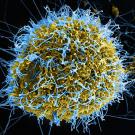
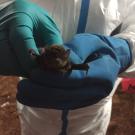
The government of Liberia, in partnership with the Center for Infection and Immunity (CII) at the Columbia University Mailman School of Public Health and EcoHealth Alliance, announced the discovery of Ebola virus in a bat in Liberia. This is the first finding of Zaire ebolavirus in a bat in West Africa, adding to other evidence suggesting bats serve as a natural wildlife reservoir for Ebola and other related viruses.
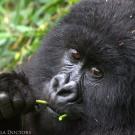
SeaDoc Society is a nonprofit born out of the UC Davis School of Veterinary Medicine. It's trying to form a new medical database to diagnose and treat individual, ailing orcas. The project is being modeled after a personalized veterinary approach used on critically endangered mountain gorillas in Africa.
After collecting data and comparing it with every known mammal and bird species on Earth, scientists from the University of California, Davis, have identified wildlife species that are the most likely to host flaviviruses such as Zika, West Nile, dengue and yellow fever. Flaviviruses are known to cause major epidemics and widespread illness and death throughout the world.