Some of the most difficult cancers to treat occur in the brain. Despite decades of research, outcomes for many children, adults and companion animals with aggressive brain tumors have improved little.
UC Davis is bringing together experts from human and veterinary medicine to help change that trajectory.
It isn’t often that researchers involved in the fundamental aspects of translational medicine get to meet a patient who has benefitted from a decade or more of basic science. So, when Dr. Stephen McSorley and his postdoctoral researcher Dr. Marietta Ravesloot-Chavez met Snoopy on the last day of his clinical trial, there were lots of ear scratches to deliver.
Disorders of the temporomandibular joint (TMJ) have long been known as contributors to orofacial pain and dysfunction in a dog’s ability to maintain a good quality of life, including eating, drinking, vocalizing, and using their mouth for useful activities. Treatment of TMJ conditions—such as cancerous tumors, severe inflammatory diseases, and septic arthritis—have progressed significantly over the past decade with research and clinical breakthroughs by veterinarians dedicated to oral health.
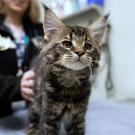
UC Davis’ unique integration of human and animal health expertise has given a fluffy, friendly kitten a chance at survival — and opened the door to ideas that could someday help human patients.
When Erin Cooper noticed her Maine Coon kitten Viggo had an oversized head, she never imagined it meant something serious. But an MRI revealed feline hydrocephalus: a buildup of fluid inside the brain that is often fatal.
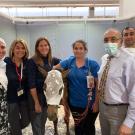
The UC Davis School of Veterinary Medicine is pleased to welcome Dr. Heidi Reesink as a Professor of Veterinary Orthopedics. A board-certified surgeon, Dr. Reesink will have a clinical appointment with the Veterinary Medical Teaching Hospital’s (VMTH) Equine Surgery and Lameness Service, as well as a research laboratory within the school’s J.D. Wheat Veterinary Orthopedic Laboratory.
As one of the world’s first fetal surgeons, Diana Farmer has long been focused on the smallest of patients.
She specializes in treating birth defects inside and outside of the womb, treating congenital anomalies and cancer and performing airway and intestinal surgeries. In the late 1990s, she became the first woman in the world to perform open fetal surgery.
Veterinary medicine continues to find commonalities among conditions that affect animals and humans. This week, Dr. Monica Aleman presented an overview at the Platinum Summit in San Antonio of Juvenile Idiopathic Epilepsy (JIE) in Egyptian Arabian foals—an epileptic syndrome similar to one found in infants.
Collaborative and translational research is a cornerstone of advancing the science of veterinary medicine at UC Davis. Three scientists at the university are taking regenerative medicine to new heights.
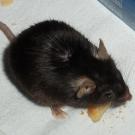
Chlamydia is the most common sexually transmitted infection in the U.S. New work from the Center for Immunology and Infectious Diseases at UC Davis shows that it may be feasible to create a vaccine against the bacterial infection.
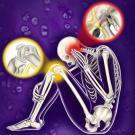
There are many similarities between the usage, and consequent injury, in knee joints and the jaw’s temporomandibular joint (TMJ). However, knee orthopedics are better researched and funded, resulting in tissue-engineered products and other ways to improve the lives of those affected. Dr. Boaz Arzi, professor and dentist/maxillofacial surgeon with the UC Davis School of Veterinary Medicine, joined biomedical engineers and orthopedic surgeons from UC Irvine, orthopedic surgeons from Harvard University, oral/maxillofacial surgeons from the University of Texas, and oral/maxillofacial radiologists to research the subject further.